I had to flip a ways back through my blog (do you "flip" through a blog given that it's not made of paper?) to find my last NaNoWriMo post, and it was back in 2019, because... well... cancer arrived in 2020 and preparing for treatment understandably killed my inclination to do NaNoWriMo.
The month felt a bit odd, not doing it, and in retrospect I probably could have done it anyway given that my chemotherapy didn't start under December and it might have been a good way to keep my mind off things, but in any case, that's water under the bridge at this point.
Last year was 2021. I had a feeding tube in my gut, but I was feeling better, so I decided I would do stealth NaNoWriMo without telling anyone, so if I failed, it would be okay. No one would need to know. (Sometimes my ego can be a little fragile.) I was not happy with the 50k words I put out, as it was the first time my story had morphed so drastically from the start of the novel to the midway point (because 50k is not really a standard novel length anymore) that I realized the beginning of the book no longer supported the ending.
In fact I ended up changing the title, which referred to the two main characters, because one of the pair ended up being a side character who I struggled to work into scenes. It was a mess!
Though I like some scenes and some elements of the story, that draft has been entirely dumpstered (not deleted, but I won't be using any of it) and I'm rewriting it from scratch for this year's NaNoWriMo. There's just too much I'm changing to lift the same scenes without taking in the new context, and I like drafting far more than revision, so this is the best way given my writing style.
I'm actually a little behind as of this writing, but this time I'm okay with saying that I'm doing NaNoWriMo again. It's been challenging for me to get back into writing post-cancer and just finding a regular system that works while also trying to figure out a new rhythm to my life, but I'm hoping I'll get there.
Showing posts with label writing. Show all posts
Showing posts with label writing. Show all posts
Monday, November 7, 2022

Monday, October 26, 2020
NaNoWriMo 2020
Things have been a bit rough for me on the creative front since my bout with cancer last year, and dealing with covid this year hasn't helped with. I used to do most of my writing outside of the house, but now I'm in the house all the time (day job lets me work from home) and I've having difficulty adjusting.
So I'm going to try to get back in the writing groove again with NaNoWriMo this year. I'd been working on a novel series for the past few installments, and that's pretty much drafted (but not revised), so I'm going to clear my brain and start something new this year.
If you'd like someone to write with, you can follow my profile on the site. I generally write somewhere around 2000-2300 words a day while I'm participating, not because I'm trying to overachieve, but I find that a good length for me when it comes to story beats. When I deviate from that in my daily writing, the resulting chapters need a lot of work to make them flow the way I want.
I'm not ready to share the title of the project, being that it's so early, but I quickly found my theme song for it in the new single by debuting solo artist, rei. Here's a video of her performing "Shirayukihime" on the First Take, a video series where artists are recorded performing a song in a single take.
And because not everyone understands Japanese, the song title translates to "Princess Snow White" and a translated set of lyrics can be found here for the original version as performed by the group, Flower.
So I'm going to try to get back in the writing groove again with NaNoWriMo this year. I'd been working on a novel series for the past few installments, and that's pretty much drafted (but not revised), so I'm going to clear my brain and start something new this year.
If you'd like someone to write with, you can follow my profile on the site. I generally write somewhere around 2000-2300 words a day while I'm participating, not because I'm trying to overachieve, but I find that a good length for me when it comes to story beats. When I deviate from that in my daily writing, the resulting chapters need a lot of work to make them flow the way I want.
I'm not ready to share the title of the project, being that it's so early, but I quickly found my theme song for it in the new single by debuting solo artist, rei. Here's a video of her performing "Shirayukihime" on the First Take, a video series where artists are recorded performing a song in a single take.
And because not everyone understands Japanese, the song title translates to "Princess Snow White" and a translated set of lyrics can be found here for the original version as performed by the group, Flower.
Monday, April 20, 2020
Intergalactic Medicine Show Now Free To Read
Orson Scott Card's Intergalactic Medicine Show shut down last year, which was a shame since it was a long-running market that leaned more towards adventure than most other venues. Being subscription based, it wasn't as easy to read as other online magazines like Lightspeed or Strange Horizons, but following its shutdown, it's now opened its archives to be free to read for everyone.
I've been fortunate enough to have two stories published there; "All Times, All At Once" and "Poison Maiden, Open Skies."
If you haven't had a chance to read either of them, now is the time.
"All Times, All At Once" follows a group of scientists investigating the mysterious deaths of a group of colonists following a distress call. Things get very Lovecraftian.
"Poison Maiden, Open Skies" is another WWI story from me involving the women of Harpy Squad, a special unit composed of former munitions workers who have become deadly poisonous following an accident in their factory. It's also a Christmas story (I'm not kidding).
Both stories were fortunate enough to receive gorgeous color art, which in itself is worth checking out!
I've been fortunate enough to have two stories published there; "All Times, All At Once" and "Poison Maiden, Open Skies."
If you haven't had a chance to read either of them, now is the time.
"All Times, All At Once" follows a group of scientists investigating the mysterious deaths of a group of colonists following a distress call. Things get very Lovecraftian.
"Poison Maiden, Open Skies" is another WWI story from me involving the women of Harpy Squad, a special unit composed of former munitions workers who have become deadly poisonous following an accident in their factory. It's also a Christmas story (I'm not kidding).
Both stories were fortunate enough to receive gorgeous color art, which in itself is worth checking out!
Monday, March 2, 2020
Jack of Spades Novella Complete
Jack of Spades is all done! I've been serializing my novella at Curious Fictions since November, and after eight installments, the novella is finally complete.
Jack of Spades follows Gerard Adher, a formerly privileged young man, who lost everything when Colony Director Bennet established himself as dictator and ordered the murder of Gerard's parents and sister. After failing to assassinate the director, he and his fellow conspirators were thrown into a lethal prison for the entertainment of the new government. Each day is a fight simply to survive, and Gerard has gotten good at it, to the point where he no longer thinks about why or for what he is surviving at all.
But he does know one thing. Their group was betrayed, and the traitor is still among them.
You can read the first chapter for free and at the moment the novella itself is only $1 for non-subscribers. If you subscribe for a month, you'll have access not only to Jack of Spades, but several of my other stories that are not freely available on the web.
Jack of Spades follows Gerard Adher, a formerly privileged young man, who lost everything when Colony Director Bennet established himself as dictator and ordered the murder of Gerard's parents and sister. After failing to assassinate the director, he and his fellow conspirators were thrown into a lethal prison for the entertainment of the new government. Each day is a fight simply to survive, and Gerard has gotten good at it, to the point where he no longer thinks about why or for what he is surviving at all.
But he does know one thing. Their group was betrayed, and the traitor is still among them.
You can read the first chapter for free and at the moment the novella itself is only $1 for non-subscribers. If you subscribe for a month, you'll have access not only to Jack of Spades, but several of my other stories that are not freely available on the web.
Monday, November 18, 2019
Loscon and NaNo Progress
I will only be at Loscon for one day this year, but if you happen to be there, you can see me on Ethics in Speculative Fiction at 10:00 am on Sunday, December 1st. I'll likely hang around for a little while after as well.
It's kind of funny heading back to the same hotel again so soon since it's where World Fantasy was only a few weeks ago!
In other news my NaNoWriMo progress is going well, and I'm pretty happy with that. Not just because I'm on track to finish, but because this means that I'm getting over the creative logjam that started with my illness earlier this year. It was a little nerve-wracking getting started and my outlines are never as thorough as I want them to be, but I'm relatively pleased so far.
I'm currently at the 30k mark and have started the second story arc. I don't want to talk details this early in the process, but I'm stretching my creative legs and trying a few things I haven't done before. I can see there the rough spots are and I'm already leaving myself revision notes, but I think the draft will be viable.
This is going to go past the 50k NaNo target range, which was expected, but how far, I'm not sure yet. I was picturing the novel broken into three parts, but at the same time I don't see this draft hitting 90k as the middle arc feels leaner to me.
It's kind of funny heading back to the same hotel again so soon since it's where World Fantasy was only a few weeks ago!
In other news my NaNoWriMo progress is going well, and I'm pretty happy with that. Not just because I'm on track to finish, but because this means that I'm getting over the creative logjam that started with my illness earlier this year. It was a little nerve-wracking getting started and my outlines are never as thorough as I want them to be, but I'm relatively pleased so far.
I'm currently at the 30k mark and have started the second story arc. I don't want to talk details this early in the process, but I'm stretching my creative legs and trying a few things I haven't done before. I can see there the rough spots are and I'm already leaving myself revision notes, but I think the draft will be viable.
This is going to go past the 50k NaNo target range, which was expected, but how far, I'm not sure yet. I was picturing the novel broken into three parts, but at the same time I don't see this draft hitting 90k as the middle arc feels leaner to me.
Monday, November 11, 2019
Jack of Spades, Now at Curious Fictions
I'm trying an experiment. As mentioned in my original health post back in July, I wanted a chance to earn some of the support I was eventually given. And one of those things was asking people to support my writing through Curious Fictions.
For the past few months I've been posting a backlog of the reprints I had the rights to, some of which have never been available outside of a physical copy or paywall, and now I'm moving on to the bonus item, the novella Jack of Spades. This is something I wrote quite a while ago. To give you an idea of how long ago, one of the reasons I stopped submitting it is that the Hunger Games became popular and I was afraid people would think I was trying to cash in on that.
I also wasn't quite the writer then that I am now. But I still liked the story.
So I decided that I would offer it as a special bonus to subscribers. Much to my dismay, it wasn't at the level of storytelling my memory told me it was, so I rolled up my sleeves and started revision work. I think it's much better now, though I know readers won't be able to compare!
Now Jack of Spades is live and you can read the first chapter for free. New installments will go up every two weeks until it is done.
If you like the idea of seeing additional fiction from me on a regular basis, please consider subscribing. If this does well, I'd love to write more serials.
For the past few months I've been posting a backlog of the reprints I had the rights to, some of which have never been available outside of a physical copy or paywall, and now I'm moving on to the bonus item, the novella Jack of Spades. This is something I wrote quite a while ago. To give you an idea of how long ago, one of the reasons I stopped submitting it is that the Hunger Games became popular and I was afraid people would think I was trying to cash in on that.
I also wasn't quite the writer then that I am now. But I still liked the story.
So I decided that I would offer it as a special bonus to subscribers. Much to my dismay, it wasn't at the level of storytelling my memory told me it was, so I rolled up my sleeves and started revision work. I think it's much better now, though I know readers won't be able to compare!
Now Jack of Spades is live and you can read the first chapter for free. New installments will go up every two weeks until it is done.
If you like the idea of seeing additional fiction from me on a regular basis, please consider subscribing. If this does well, I'd love to write more serials.
Monday, November 4, 2019
NaNoWriMo 2019
I'm going to be doing NaNoWriMo again this year, though I'll be getting a late start since I wanted to wait until after the World Fantasy Convention ended. (It's really hard to work while at a con.) So today is really my first day of work!
That puts me behind a bit, but after writing so much, I've learned a lot about my novel writing and revising process; enough to know that I don't actually like writing the 1667 minimum words per day. I like to write more, and the reason for that is 1667 words is not a chapter for me. It's too short.
My chapters tend to be somewhere between 2000-3000 words (closer to the 2000 word end on first draft, as I'm definitely a put-in more than take-out sort of person when doing revision).
I could write less than a chapter a day, and in previous NaNos I did, but I discovered during revision that I had to make more edits that way, because I would forget details from the day before. So now what I do is write my chapter straight through until it's done, so I can manage its beginning, middle, and end in one go, keeping the entire "arc" in my head. And it's worked better for me.
This also means that it only takes me 25 days to hit the NaNo goal (probably less, because I'm not always writing the minimum--the chapter is whatever it requires) and I'll still finish by the time the month is over.
Since I've been dealing with cancer most of this year, I haven't had much chance to write, but now that I'm healthier again I'm hoping that I can kickstart my writing engine with a new book.
That puts me behind a bit, but after writing so much, I've learned a lot about my novel writing and revising process; enough to know that I don't actually like writing the 1667 minimum words per day. I like to write more, and the reason for that is 1667 words is not a chapter for me. It's too short.
My chapters tend to be somewhere between 2000-3000 words (closer to the 2000 word end on first draft, as I'm definitely a put-in more than take-out sort of person when doing revision).
I could write less than a chapter a day, and in previous NaNos I did, but I discovered during revision that I had to make more edits that way, because I would forget details from the day before. So now what I do is write my chapter straight through until it's done, so I can manage its beginning, middle, and end in one go, keeping the entire "arc" in my head. And it's worked better for me.
This also means that it only takes me 25 days to hit the NaNo goal (probably less, because I'm not always writing the minimum--the chapter is whatever it requires) and I'll still finish by the time the month is over.
Since I've been dealing with cancer most of this year, I haven't had much chance to write, but now that I'm healthier again I'm hoping that I can kickstart my writing engine with a new book.
Monday, July 15, 2019
"Unfilial Child" is Featured Story at Curious Fictions
First, I want to thank everyone who has reached out to me in support over the past week. The well wishes and assistance are greatly appreciated that. I will be going into surgery this Wednesday, and hopefully all will be well with my recovery.
As mentioned last week, I am beefing up my Curious Fictions presence with three new stories. The free one, "Unfilial Child," is in fact the featured story for this week! So if you haven't already taken a look, please do.
"Living Rooms" and "The Final Gift of Zhuge Liang" are also readable for a token subscription cost.
The next subscriber story should be going live on the 21st (unless surgery leaves me too tired to hit the publish button), and that will be my space pirate novelette "Between Earth and Exile." Alexa escaped a conquered Earth as a teenager, living with other human exiles on the Bloodborne and surviving as a raider in a galaxy now hostile to humanity. But her family is still back on Earth, and she has a plan to rescue them.
I'm going to try lightening my blog load during my recovery, so next week's post is already queued up and should go up automatically next Monday without any input from me. I hope you'll enjoy my look at the story for the puzzle-platformer The Liar Princess and the Blind Prince.
I'll also be playing a new RPG or visual novel during my recovery period. If you'd like to vote for what I cover in a later RPG or VN Talk, please take the survey. The primary criteria for what games I placed on the list is that they have to be games I already have in my backlog and have not yet played.
As mentioned last week, I am beefing up my Curious Fictions presence with three new stories. The free one, "Unfilial Child," is in fact the featured story for this week! So if you haven't already taken a look, please do.
"Living Rooms" and "The Final Gift of Zhuge Liang" are also readable for a token subscription cost.
The next subscriber story should be going live on the 21st (unless surgery leaves me too tired to hit the publish button), and that will be my space pirate novelette "Between Earth and Exile." Alexa escaped a conquered Earth as a teenager, living with other human exiles on the Bloodborne and surviving as a raider in a galaxy now hostile to humanity. But her family is still back on Earth, and she has a plan to rescue them.
I'm going to try lightening my blog load during my recovery, so next week's post is already queued up and should go up automatically next Monday without any input from me. I hope you'll enjoy my look at the story for the puzzle-platformer The Liar Princess and the Blind Prince.
I'll also be playing a new RPG or visual novel during my recovery period. If you'd like to vote for what I cover in a later RPG or VN Talk, please take the survey. The primary criteria for what games I placed on the list is that they have to be games I already have in my backlog and have not yet played.
Monday, May 6, 2019
"All Times, All At Once" Is Out In Intergalactic Medicine Show
My latest short story "All Times, All At Once" is now out in the April 2018 issue of Intergalactic Medicine Show. You might have already heard if you follow me on Twitter or Facebook. This issue seemed to be running late, but the good thing is it's now available to readers.
Currently a subscription is required, but it will become available for free later this year after the magazine ceases publication. Unfortunately, this is IGMS's penultimate issue and I'm sorry to be losing such a good market. This is my second time appearing there and my second time getting the cover art as well. I've been very fortunate in that regard.
"All Times, All At Once" is set in the far future when humanity has colonized the stars, but in some places, the stars are definitely "not right" as the crew aboard the Starfish quickly learns when they answer a colony's distress signal. If you love the idea of space colonies, Lovecraftian fiction, and Chinese food, this may be up your alley!
I know I missed a post with my Code:Realize ~Wintertide Miracles~ VN Talk series last week. Sorry about that. I'll pick up with Impey next week.
Currently a subscription is required, but it will become available for free later this year after the magazine ceases publication. Unfortunately, this is IGMS's penultimate issue and I'm sorry to be losing such a good market. This is my second time appearing there and my second time getting the cover art as well. I've been very fortunate in that regard.
"All Times, All At Once" is set in the far future when humanity has colonized the stars, but in some places, the stars are definitely "not right" as the crew aboard the Starfish quickly learns when they answer a colony's distress signal. If you love the idea of space colonies, Lovecraftian fiction, and Chinese food, this may be up your alley!
I know I missed a post with my Code:Realize ~Wintertide Miracles~ VN Talk series last week. Sorry about that. I'll pick up with Impey next week.
Monday, April 9, 2018
Listen to "The Ancestors" on Toasted Cake
Last week "The Ancestors" went up on the Toasted Cake podcast. It was originally published in Crossed Genres" and this is the first time "The Ancestors" has appeared in audio.
Ching Ming (or Qingming, depending on dialect and where you grew up) is what my parents called Chinese Memorial Day. We go out to the graves of our ancestors and drop off flowers and offer food. Sort of like how people in the west will visit cemeteries on Easter, except I don't think setting out food is as common on Easter.
One of the things I noticed growing up is that my family didn't do things the same way as other families we'd see at the cemetery, or the way that it would be discussed in class (if it came up at all, being that I went to American schools). My family never picnicked in the cemetery, and we didn't burn proper paper money. On the other hand, we had a bowing and wine pouring ceremony for the male members of the family that I didn't see others doing.
When I asked my dad about it, he said that every family celebrates differently, and the memory of that answer is what formed the nucleus of my story "The Ancestors."
For those reading my Root Double: Before Crime * After Days VN Talk series, it will resume next week!
Ching Ming (or Qingming, depending on dialect and where you grew up) is what my parents called Chinese Memorial Day. We go out to the graves of our ancestors and drop off flowers and offer food. Sort of like how people in the west will visit cemeteries on Easter, except I don't think setting out food is as common on Easter.
One of the things I noticed growing up is that my family didn't do things the same way as other families we'd see at the cemetery, or the way that it would be discussed in class (if it came up at all, being that I went to American schools). My family never picnicked in the cemetery, and we didn't burn proper paper money. On the other hand, we had a bowing and wine pouring ceremony for the male members of the family that I didn't see others doing.
When I asked my dad about it, he said that every family celebrates differently, and the memory of that answer is what formed the nucleus of my story "The Ancestors."
For those reading my Root Double: Before Crime * After Days VN Talk series, it will resume next week!
Monday, March 26, 2018
"Even the Mountains Are Not Forever" is Story of the Week at Curious Fictions
In case you missed the Twitter announcement, my short story "Even the Mountains Are Not Forever" is currently the story of the week for March 21st at Curious Fictions.
Curious Fictions is a living short story collection where new pieces are always being added by authors and all of them have appeared in professional venues before, so you can assume a similar level of quality in all the writing. If you like a given story, there is the option to subscribe to an author and/or tip them for the read.
The collection consists of hundreds of stories across multiple genres, with an estimated read time for the busy reader. It's well worth checking out!
Curious Fictions is a living short story collection where new pieces are always being added by authors and all of them have appeared in professional venues before, so you can assume a similar level of quality in all the writing. If you like a given story, there is the option to subscribe to an author and/or tip them for the read.
The collection consists of hundreds of stories across multiple genres, with an estimated read time for the busy reader. It's well worth checking out!
Monday, February 5, 2018
Writing "Kite Dancer"
I was doing research for a different World War I story when I got a request to submit something to a steampunk anthology. I don't consider myself a steampunk writer, though I've been told sometimes that my stories resemble it, but World War I tends to be the later end of the steampunk period, so I figured I could probably write something appropriate with the research I was already doing. That's how "Kite Dancer" came about.
The book I was reading for research was Strangers on the Western Front by Guoqi Xu, which discusses the Chinese presence in Europe during World War I. It's a very obscure topic as most things taught about the western front focus on the conflict between the English, the French, and the Germans.
I hadn't gotten deep into the book yet, but one of the things that stood out to me, as a ethnic Chinese person raised in the United States, was how mistreated China was by the Entente, or Allied Powers (which included Japan and the UK), while China was still neutral. The British were actually surprised that when China entered the war, it chose the side of the Entente, precisely because they knew exactly how rotten they'd been. They thought that if China chose anyone, it would have been the Central Powers, because then China could reclaim all the territory that the British and the Japanese were holding.
The Chinese government at the time probably understood it was siding with its own abuser, but the prevailing thought was that if it was going to be on any side, it wanted to be the on winning one. This was a very weak period in Chinese history and the fledgling government wanted to make its debut on the world stage.
The thought that China could have sided with the Central Powers, and had a reasonable case to do so, stuck with me. So in my story, I made a justification in having Kaiser Wilhelm II going out of his way to woo China to join his side. It probably would not have taken a whole lot to push China a different direction. If the Germans had stood more of a chance, China might have gone with with the Central Powers in our world too.
This gave me a chance to write a World War I story told largely from the eyes of an outsider, Ke-feng, whose name is written in the old Wade-Giles romanization system to show the hold that colonization has had on her part of the country. Ke-feng is from Qingdao, then known as Tsingtau to the Germans and Tsingtao to the English speaking world, which was a German colony in the early part of the 20th century. If you ever wondered why there's a Chinese beer called Tsingtao you can thank/blame the Germans for that.
Because I like fantasy, I gave Ke-feng wind magic. It felt like something could have started as an art form and later weaponized with the advent of airships. If I was going to do steampunk and World War I, how could I not set a story on a zeppelin? This allowed the zeppelins to be the serious threat that they never were in real life. (Wind currents often carried them off target.)
And for fun I got to add in the airborne equivalent of an aircraft carrier. The larger naval ships were often named after German states, so I wanted to name my airborne carrier in the same fashion, only to find out that a lot of the good names were taken, so I looked at some of the former states that are no longer a part of Germany and found a couple potential ideas. Naming it the SMS Pomerania was vetoed on account of potentially reminding people of small dogs, so it became the SMS Silesia. The zeppelins themselves continued the numbering sequence from the real world under the assumption that the Germans made additional, more improved models in this alternate version of the war.
Ke-feng is a very angry individual thanks to having been reassigned on the opposite side of the globe from the part of the war she wanted to fight. She signed up to free her city from the Japanese, but because the Germans need kite dancers elsewhere, she finds herself all the way in western Europe in a battle between two countries that don't entirely matter to her.
I spent a lot of time thinking about the ending for this one, because I wanted to show the difference between individuals and the countries they belong to, so I hope that comes across.
Though I wrote "Kite Dancer" for an anthology, I ended up selling it to Galaxy's Edge instead, and you can currently read it there for free up until the end of February.
Music listened to while writing: "Brave Shine" by Aimer
The book I was reading for research was Strangers on the Western Front by Guoqi Xu, which discusses the Chinese presence in Europe during World War I. It's a very obscure topic as most things taught about the western front focus on the conflict between the English, the French, and the Germans.
I hadn't gotten deep into the book yet, but one of the things that stood out to me, as a ethnic Chinese person raised in the United States, was how mistreated China was by the Entente, or Allied Powers (which included Japan and the UK), while China was still neutral. The British were actually surprised that when China entered the war, it chose the side of the Entente, precisely because they knew exactly how rotten they'd been. They thought that if China chose anyone, it would have been the Central Powers, because then China could reclaim all the territory that the British and the Japanese were holding.
The Chinese government at the time probably understood it was siding with its own abuser, but the prevailing thought was that if it was going to be on any side, it wanted to be the on winning one. This was a very weak period in Chinese history and the fledgling government wanted to make its debut on the world stage.
The thought that China could have sided with the Central Powers, and had a reasonable case to do so, stuck with me. So in my story, I made a justification in having Kaiser Wilhelm II going out of his way to woo China to join his side. It probably would not have taken a whole lot to push China a different direction. If the Germans had stood more of a chance, China might have gone with with the Central Powers in our world too.
This gave me a chance to write a World War I story told largely from the eyes of an outsider, Ke-feng, whose name is written in the old Wade-Giles romanization system to show the hold that colonization has had on her part of the country. Ke-feng is from Qingdao, then known as Tsingtau to the Germans and Tsingtao to the English speaking world, which was a German colony in the early part of the 20th century. If you ever wondered why there's a Chinese beer called Tsingtao you can thank/blame the Germans for that.
Because I like fantasy, I gave Ke-feng wind magic. It felt like something could have started as an art form and later weaponized with the advent of airships. If I was going to do steampunk and World War I, how could I not set a story on a zeppelin? This allowed the zeppelins to be the serious threat that they never were in real life. (Wind currents often carried them off target.)
And for fun I got to add in the airborne equivalent of an aircraft carrier. The larger naval ships were often named after German states, so I wanted to name my airborne carrier in the same fashion, only to find out that a lot of the good names were taken, so I looked at some of the former states that are no longer a part of Germany and found a couple potential ideas. Naming it the SMS Pomerania was vetoed on account of potentially reminding people of small dogs, so it became the SMS Silesia. The zeppelins themselves continued the numbering sequence from the real world under the assumption that the Germans made additional, more improved models in this alternate version of the war.
Ke-feng is a very angry individual thanks to having been reassigned on the opposite side of the globe from the part of the war she wanted to fight. She signed up to free her city from the Japanese, but because the Germans need kite dancers elsewhere, she finds herself all the way in western Europe in a battle between two countries that don't entirely matter to her.
I spent a lot of time thinking about the ending for this one, because I wanted to show the difference between individuals and the countries they belong to, so I hope that comes across.
Though I wrote "Kite Dancer" for an anthology, I ended up selling it to Galaxy's Edge instead, and you can currently read it there for free up until the end of February.
Music listened to while writing: "Brave Shine" by Aimer
Monday, January 8, 2018
"Kite Dancer" Is Out In Galaxy's Edge
My latest short story "Kite Dancer" is now out in the January 2018 issue of Galaxy's Edge. You might have already heard if you follow me on Twitter or Facebook.
This is an alternate World War I with steampunk and wind magic, where China joins the Central Powers (which they did not do in real life). The protagonist Ke-feng used to be a kite dancer who commanded the wind for performances, but that was ruined when the Japanese invaded Tsingtau (which did happen in real life). Left with few options, she has signed up for the military in hopes of freeing her city, but the military has other plans for her.
"Kite Dancer" will be free to read until the end of February. It can also be purchased at any time as a digital or physical copy.
This is an alternate World War I with steampunk and wind magic, where China joins the Central Powers (which they did not do in real life). The protagonist Ke-feng used to be a kite dancer who commanded the wind for performances, but that was ruined when the Japanese invaded Tsingtau (which did happen in real life). Left with few options, she has signed up for the military in hopes of freeing her city, but the military has other plans for her.
"Kite Dancer" will be free to read until the end of February. It can also be purchased at any time as a digital or physical copy.
Monday, November 6, 2017
Killing It Softly 2 Anthology
Digital Fiction Online has released the second in their horror anthology series Killing It Softly 2, and I'm in it! You can pick it up on Amazon and it's ridiculously big, with over 30 short stories.
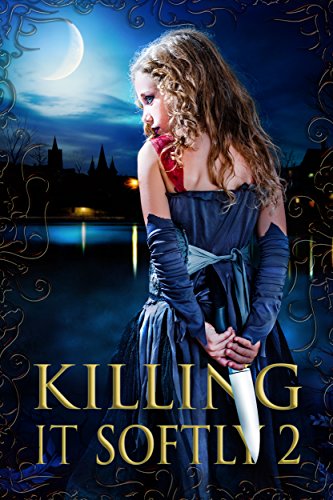
And I'm sharing a ToC with Elaine Cunningham. Oh my! I read so much of her D&D stuff back in high school and she was one of the authors who regularly would hang out on the Wizards of the Coast forums where other aspiring fantasy writers were talking about submissions.
Killing It Softly 2 has a reprint of my story "Unfilial Child." If you'd like some dark urban fantasy set in LA's Chinatown, you may want to give it a look!
And I'm sharing a ToC with Elaine Cunningham. Oh my! I read so much of her D&D stuff back in high school and she was one of the authors who regularly would hang out on the Wizards of the Coast forums where other aspiring fantasy writers were talking about submissions.
Killing It Softly 2 has a reprint of my story "Unfilial Child." If you'd like some dark urban fantasy set in LA's Chinatown, you may want to give it a look!
Monday, October 30, 2017
NaNoWriMo 2017
November sure sneaks up fast! I'm taking a break from the Collar x Malice breakdown to say that I'll be doing National Novel Writing Month as usual. I'll be writing somewhere in the ballpark between 50-60k in November.
As I've developed as a writer I find I just work better when I do as much of the first draft as possible in a single streak. Taking breaks is bad, because then I forget things. (Honestly, I tend to forget things anyway in the middle of a draft, but it's worse when the draft is stretched out over several months.)
This strategy might not work for everyone, but it does for me, especially if I come prepared with an outline, which I have. I'm expecting this will be my best first draft in a while, thanks to my prep work.
Like writing, outlining is a skill and I think it's the most comfortable outline I've made yet. This helps me churn out words without having to think as much about where the story is going. I'll adjust if needed, but the idea is that most of the story is laid out already so I can focus on the writing itself rather than where the story needs to go next.
I'm also a short chapter person, so I find that by writing at my usual NaNoWriMo pace I end up writing a chapter a day, which works out, because I always have my ending point to shoot for and I know where I need to be by the end of the day.
As I've developed as a writer I find I just work better when I do as much of the first draft as possible in a single streak. Taking breaks is bad, because then I forget things. (Honestly, I tend to forget things anyway in the middle of a draft, but it's worse when the draft is stretched out over several months.)
This strategy might not work for everyone, but it does for me, especially if I come prepared with an outline, which I have. I'm expecting this will be my best first draft in a while, thanks to my prep work.
Like writing, outlining is a skill and I think it's the most comfortable outline I've made yet. This helps me churn out words without having to think as much about where the story is going. I'll adjust if needed, but the idea is that most of the story is laid out already so I can focus on the writing itself rather than where the story needs to go next.
I'm also a short chapter person, so I find that by writing at my usual NaNoWriMo pace I end up writing a chapter a day, which works out, because I always have my ending point to shoot for and I know where I need to be by the end of the day.
Monday, July 10, 2017
Preparation Tips for Giving a Talk
Last weekend I gave a talk on how and why to write short stories to a local writer group. Though I have been on several panels at conventions, it's much rarer for me to give a solo talk. In fact, this was only the second time I had done so.
It's a much different animal from a panel, because I can't bounce off other people's ideas and I know if I stop talking for whatever reason, it's unlikely someone else will jump in to fill the silence. My first time giving a talk was extremely nerve-wracking, even though I had taken a lot of notes and brought them up to the podium with me. I knew better than to talk while reading off the paper (head pointed down at podium is bad), but I was incredibly nervous, and I know that I ended up speaking a lot faster than I meant to. In turn, that made my talk go faster.
I don't remember at this point, how much I had rehearsed for that first talk, but my second is still fresh in memory, so I can talk what I did to prepare for it, because I did much better this time.
My talk was to be focused around how and why a writer should write short stories. I knew that the group had never had a short story writer speak to them before, so I specifically geared my talk with the assumption that most of the audience was coming from a novel-writing background. I would have 45 minutes, and then there would be time for questions afterwards. The organizer who invited me said it would be okay if I ended a little early, but I didn't want to. I wanted to do this as practice and a character building exercise for myself.
1) Outline in Four Parts
The first thing I did was outline my talk. Given that it was planned for 45 minutes, I figured I would break the entire thing up into four topics, roughly ten minutes each. I decided they would be:
After deciding on my four main topics, I proceeded to add notes underneath each heading so I had an idea of what to bring up in relation to the topic. I decided that it wouldn't be critical for me to bring up each individual bullet point, but these were related subjects that I could use to illustrate the answers to the proposed questions or illustrate the hows of the second half.
2) Time the Talk Without Directly Reading
After I figured I'd populated the outline enough, I started talking about my first topic. I allowed myself the chance to glance at the outline, but I could not read in depth. The idea was that I was always speaking, and I let myself go off the rails if it felt like it made sense to do so. I knew what my second topic was going to be, so if I got too far afield, I knew to reel myself in and redirect.
I timed each of the four topics independently of each other. And it turned out that in my first run, the first topic was 8 minutes, the second 4 minutes, the third 8 minutes, and the fourth 16 minutes. Combined with my 2 minute introduction, that ended up being around 38 minutes, which was not a bad place to start at all.
And some of my rambling while attempting to keep myself speaking, actually turned out to be useful, and I added those to the notes.
3) Adjust the Outline
Since I knew how long the different parts were, it made adjusting the length of the talk easier, because I could shore up individual parts without adding random padding at the end in an effort to say more. At this point I also realized that my introduction was only an introduction to the talk, but didn't identify myself or my credentials, so I retroactively added that, and got a couple more minutes added in.
When the day of the talk came, I arrived to find that the music stand that was supposed to be supplied in place of a podium wasn't tall enough to be used while I was standing. We tried putting it on the table, but then it was too tall and would blow the view of people around me.
I did the courageous thing and opted not to use the music stand at all, and laid my outline flat on the table in front of me. This meant that I really could not read off of it without obviously talking to the table.
But you know? It turned all right.
The audience was great and whenever I started to lose myself, I would pause, take a glance, and then only speak again after I looked up. I could feel I was more relaxed this time. I wasn't talking as fast. And once I finished, there were plenty of questions. So many questions! I wasn't used to this, even on panels.
I think we wrapped up about 70-75 minutes after we started, so it was very good considering that the talk itself was only supposed to be 45. I didn't have a chance to check what my actual talk time concluded at, but considering how long we were there, I think it was likely close.
I was pretty nervous leading up to the talk, but I told myself to do it, because it would be good me, and it was.
It's a much different animal from a panel, because I can't bounce off other people's ideas and I know if I stop talking for whatever reason, it's unlikely someone else will jump in to fill the silence. My first time giving a talk was extremely nerve-wracking, even though I had taken a lot of notes and brought them up to the podium with me. I knew better than to talk while reading off the paper (head pointed down at podium is bad), but I was incredibly nervous, and I know that I ended up speaking a lot faster than I meant to. In turn, that made my talk go faster.
I don't remember at this point, how much I had rehearsed for that first talk, but my second is still fresh in memory, so I can talk what I did to prepare for it, because I did much better this time.
My talk was to be focused around how and why a writer should write short stories. I knew that the group had never had a short story writer speak to them before, so I specifically geared my talk with the assumption that most of the audience was coming from a novel-writing background. I would have 45 minutes, and then there would be time for questions afterwards. The organizer who invited me said it would be okay if I ended a little early, but I didn't want to. I wanted to do this as practice and a character building exercise for myself.
1) Outline in Four Parts
The first thing I did was outline my talk. Given that it was planned for 45 minutes, I figured I would break the entire thing up into four topics, roughly ten minutes each. I decided they would be:
- Why write a short story?
- What do short stories excel at?
- How to write a short story
- Getting a short story published
After deciding on my four main topics, I proceeded to add notes underneath each heading so I had an idea of what to bring up in relation to the topic. I decided that it wouldn't be critical for me to bring up each individual bullet point, but these were related subjects that I could use to illustrate the answers to the proposed questions or illustrate the hows of the second half.
2) Time the Talk Without Directly Reading
After I figured I'd populated the outline enough, I started talking about my first topic. I allowed myself the chance to glance at the outline, but I could not read in depth. The idea was that I was always speaking, and I let myself go off the rails if it felt like it made sense to do so. I knew what my second topic was going to be, so if I got too far afield, I knew to reel myself in and redirect.
I timed each of the four topics independently of each other. And it turned out that in my first run, the first topic was 8 minutes, the second 4 minutes, the third 8 minutes, and the fourth 16 minutes. Combined with my 2 minute introduction, that ended up being around 38 minutes, which was not a bad place to start at all.
And some of my rambling while attempting to keep myself speaking, actually turned out to be useful, and I added those to the notes.
3) Adjust the Outline
Since I knew how long the different parts were, it made adjusting the length of the talk easier, because I could shore up individual parts without adding random padding at the end in an effort to say more. At this point I also realized that my introduction was only an introduction to the talk, but didn't identify myself or my credentials, so I retroactively added that, and got a couple more minutes added in.
When the day of the talk came, I arrived to find that the music stand that was supposed to be supplied in place of a podium wasn't tall enough to be used while I was standing. We tried putting it on the table, but then it was too tall and would blow the view of people around me.
I did the courageous thing and opted not to use the music stand at all, and laid my outline flat on the table in front of me. This meant that I really could not read off of it without obviously talking to the table.
But you know? It turned all right.
The audience was great and whenever I started to lose myself, I would pause, take a glance, and then only speak again after I looked up. I could feel I was more relaxed this time. I wasn't talking as fast. And once I finished, there were plenty of questions. So many questions! I wasn't used to this, even on panels.
I think we wrapped up about 70-75 minutes after we started, so it was very good considering that the talk itself was only supposed to be 45. I didn't have a chance to check what my actual talk time concluded at, but considering how long we were there, I think it was likely close.
I was pretty nervous leading up to the talk, but I told myself to do it, because it would be good me, and it was.
Monday, May 15, 2017
Writing “Between Earth and Exile”
When I was fifteen, I rented an animated movie that for the first time made me wonder "What would I do?" if I was in that situation, and not in a good way. Vengeance of the Space Pirate was the censored and dubbed version of the 1981 anime movie Arcadia of My Youth, and it was not a heroic adventure. Though I hadn't realized it at the time, about half of the most objectionable scenes (usually of people getting shot/killed, or scenes of dead people) were removed or shortened, but the dialogue was left surprisingly intact.
For the first time I experienced a story where the good guys didn't save the world. The movie starts out with humanity having been subjugated by an alien race, and that doesn't change by the end. Harlock, the lead character, finds his own freedom, but he's not a freedom fighter. He doesn't try to save or inspire a people who have essentially given up.
At the end of the movie he is declared an enemy of Earth and told to leave the planet. He agrees to do so, but before he goes, he asks if anyone would go with him, knowing that they could never return.
I had never been challenged with a future this bleak in anything I’d seen or read up until this point, and as I watched Harlock leave with the people who would follow him, I couldn’t help wondering, "Would I have the guts to go? Could I have left my family? Could I leave knowing that my life on Earth would amount to nothing, but only hardship and exile would lie with Harlock?"
"Between Earth and Exile" is about a young woman who made the choice to follow her captain into exile, but after six years of fighting and scrabbling to get by, proposes a way to return to Earth and rescue her family.
This story spent years on the drawing board and went through a number of titles, from "Exile's Sorrow" to "Adolescence in Exile" to the final "Between Earth and Exile" which I think is the strongest. It was originally a much shorter story, the second half as it currently exists was not in the original draft, and I wasn't happy with the ending. I changed it twice before the final version. Alexa was always intended to lose in order to draw a parallel between her and Captain Mercer, but the circumstances of the loss changed over time.
The first ending had her in one of the Bloodborne's shuttles (the frigate didn't even exist) with three other people rather than a crew. They flew all the way to Earth to rendezvous with the transport and Alexa actually used her piloting skills during the skirmish against some Alcaltan fighters to try to save her family. But Alcaltan reinforcements arrived, including a cruiser, so our space pirates were forced to pull back back from a battle they wouldn't be able to survive.
I didn't like this ending because Alexa speny a lot of it an emotional wreck and in denial. She had to be convinced to withdraw rather than making the call on her own. This was also the only ending where Mercer offered to let her know what happened to her family after they were apprehended. Alexa refused, because if she doesn't hear they're dead she still has hope. Mercer's line "I would not have wasted the schematics on a fool’s errand" existed even back then, but because of the way things played out, it came off like he was chewing her out rather than expressing support for her initiative.
It didn't help that the fight scene was pretty limp and not well thought out. I knew I didn't want Alexa to go by herself, but there was no clear chain of command and fighting came down to "Everybody do stuff!"
The second draft is really where the story took shape. This introduced the death of Kellen, gravity technology, and the capture of the frigate that would be used what was now the second half of the story. Substituting in the frigate battle over the one with the shuttle almost doubled the length of the story, but it was worth it.
Now the battle took place in the outer edges of the solar system and used larger ships instead of smaller fighter craft. There was a chain of command and everyone on board (or at least on the bridge) had a clear role.
But… but… there was a problem when they turned around to withdraw. They were heavily damaged, being chased by a lone corvette, as they are in the final version, and I needed some way to save them. And at the time I thought, well, if I want Alexa to really feel like she isn't cut out for leadership, the worst thing would be to have Mercer show up and save her. Because then it would look like he never had confidence in her at all.
I admit I'm a little sad that I had to take out the Space Battleship Yamato-inspired Implosion Cannon, but having the Bloodborne show up to pull the frigate's butt out of the fire and annihilate the corvette didn't feel very satisfying. Even though I wanted Alexa to feel less competent than she actually is, I also wanted her to escape on her own.
Still, I sat on that ending for two years before I landed on the missile pod orbiting around Varuna idea, which is a tactic I cribbed from Arpeggio of Blue Steel, a futuristic submarine series. I had to make some changes due to being in space rather than underwater, but I liked the idea of a separate launch platform that an enemy would not expect, and this allows Alexa to make her final attack and save her crew while they're on their last legs.
There were other nips and tucks along the way. Alexa's engineer, Caleb, had a larger role at one point as her surrogate big brother, but most of the changes were along the lines of her interactions with Mercer, who I had to write a fine line around. Since the story is told in first person, we see him through Alexa's hero-worshipping eyes, so bringing out his humanity and the fact he is fallible as well, was harder. If I ever write another story set in this universe I'll probably choose a different POV character.
Between Earth and Exile can be read on Kindle in the April 2017 issue of Deep Magic.
Music listened to while writing: Soundtracks from Arcadia of My Youth and Skies of Arcadia (the latter not related) and "Ichiban no Takaramono (Yui version)" sung by LiSA. "Ichiban no Takaramono" (Most Precious Treasure) was not an entirely appropriate choice, because the lyrics don’t match the situation of the story, but the vocalist does such a great job of portraying the pain expressed in the lyrics that I couldn’t help but think of Alexa.
For the first time I experienced a story where the good guys didn't save the world. The movie starts out with humanity having been subjugated by an alien race, and that doesn't change by the end. Harlock, the lead character, finds his own freedom, but he's not a freedom fighter. He doesn't try to save or inspire a people who have essentially given up.
At the end of the movie he is declared an enemy of Earth and told to leave the planet. He agrees to do so, but before he goes, he asks if anyone would go with him, knowing that they could never return.
I had never been challenged with a future this bleak in anything I’d seen or read up until this point, and as I watched Harlock leave with the people who would follow him, I couldn’t help wondering, "Would I have the guts to go? Could I have left my family? Could I leave knowing that my life on Earth would amount to nothing, but only hardship and exile would lie with Harlock?"
"Between Earth and Exile" is about a young woman who made the choice to follow her captain into exile, but after six years of fighting and scrabbling to get by, proposes a way to return to Earth and rescue her family.
This story spent years on the drawing board and went through a number of titles, from "Exile's Sorrow" to "Adolescence in Exile" to the final "Between Earth and Exile" which I think is the strongest. It was originally a much shorter story, the second half as it currently exists was not in the original draft, and I wasn't happy with the ending. I changed it twice before the final version. Alexa was always intended to lose in order to draw a parallel between her and Captain Mercer, but the circumstances of the loss changed over time.
The first ending had her in one of the Bloodborne's shuttles (the frigate didn't even exist) with three other people rather than a crew. They flew all the way to Earth to rendezvous with the transport and Alexa actually used her piloting skills during the skirmish against some Alcaltan fighters to try to save her family. But Alcaltan reinforcements arrived, including a cruiser, so our space pirates were forced to pull back back from a battle they wouldn't be able to survive.
I didn't like this ending because Alexa speny a lot of it an emotional wreck and in denial. She had to be convinced to withdraw rather than making the call on her own. This was also the only ending where Mercer offered to let her know what happened to her family after they were apprehended. Alexa refused, because if she doesn't hear they're dead she still has hope. Mercer's line "I would not have wasted the schematics on a fool’s errand" existed even back then, but because of the way things played out, it came off like he was chewing her out rather than expressing support for her initiative.
It didn't help that the fight scene was pretty limp and not well thought out. I knew I didn't want Alexa to go by herself, but there was no clear chain of command and fighting came down to "Everybody do stuff!"
The second draft is really where the story took shape. This introduced the death of Kellen, gravity technology, and the capture of the frigate that would be used what was now the second half of the story. Substituting in the frigate battle over the one with the shuttle almost doubled the length of the story, but it was worth it.
Now the battle took place in the outer edges of the solar system and used larger ships instead of smaller fighter craft. There was a chain of command and everyone on board (or at least on the bridge) had a clear role.
But… but… there was a problem when they turned around to withdraw. They were heavily damaged, being chased by a lone corvette, as they are in the final version, and I needed some way to save them. And at the time I thought, well, if I want Alexa to really feel like she isn't cut out for leadership, the worst thing would be to have Mercer show up and save her. Because then it would look like he never had confidence in her at all.
I admit I'm a little sad that I had to take out the Space Battleship Yamato-inspired Implosion Cannon, but having the Bloodborne show up to pull the frigate's butt out of the fire and annihilate the corvette didn't feel very satisfying. Even though I wanted Alexa to feel less competent than she actually is, I also wanted her to escape on her own.
Still, I sat on that ending for two years before I landed on the missile pod orbiting around Varuna idea, which is a tactic I cribbed from Arpeggio of Blue Steel, a futuristic submarine series. I had to make some changes due to being in space rather than underwater, but I liked the idea of a separate launch platform that an enemy would not expect, and this allows Alexa to make her final attack and save her crew while they're on their last legs.
There were other nips and tucks along the way. Alexa's engineer, Caleb, had a larger role at one point as her surrogate big brother, but most of the changes were along the lines of her interactions with Mercer, who I had to write a fine line around. Since the story is told in first person, we see him through Alexa's hero-worshipping eyes, so bringing out his humanity and the fact he is fallible as well, was harder. If I ever write another story set in this universe I'll probably choose a different POV character.
Between Earth and Exile can be read on Kindle in the April 2017 issue of Deep Magic.
Music listened to while writing: Soundtracks from Arcadia of My Youth and Skies of Arcadia (the latter not related) and "Ichiban no Takaramono (Yui version)" sung by LiSA. "Ichiban no Takaramono" (Most Precious Treasure) was not an entirely appropriate choice, because the lyrics don’t match the situation of the story, but the vocalist does such a great job of portraying the pain expressed in the lyrics that I couldn’t help but think of Alexa.
Monday, May 8, 2017
Fantastic Stories' People of Color Anthology is Out
I received a little tip that the Fantastic Stories of the Imagination People of Color Flash Anthology is now out!
You can pick it up at Amazon and Barnes & Noble. It's available both as an ebook and in paperback.
This project was successfully Kickstarted back in December/early January and contains my flash story "The White Snake" in its first anthology appearance.
"The White Snake" is a take on the old Chinese story about a snake who falls in love with a human, but this time it is in modern day and the human does not care for Chinese myth at all.
You can pick it up at Amazon and Barnes & Noble. It's available both as an ebook and in paperback.
This project was successfully Kickstarted back in December/early January and contains my flash story "The White Snake" in its first anthology appearance.
"The White Snake" is a take on the old Chinese story about a snake who falls in love with a human, but this time it is in modern day and the human does not care for Chinese myth at all.
Monday, April 17, 2017
"Between Earth and Exile" now out in Deep Magic
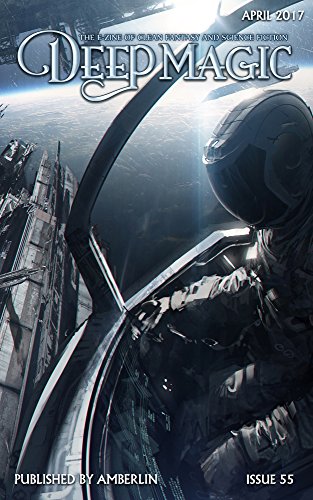 In case you missed it, the April issue of Deep Magic is now out on Amazon, containing my novelette "Between Earth and Exile."
In a far future, humanity has been pushed back from their colonies and forced to live on an overcrowded Earth by the alien Alcaltans, who now dominate the galaxy. There's no place for humans anywhere else, except for those who chose to go into exile on the Bloodborne, a stolen dreadnought turned pirate ship by Captain Mercer and his crew.
"Between Earth and Exile" follows Alexa, one of the junior crew members, who was still a teenager when she made the decision to flee Earth on the Bloodborne. Now six years later she is a young adult and wants to return to rescue whatever remains of her family.
Monday, April 10, 2017
Attack on Titan: When is it fair for a series to change genres?
Attack on Titan has been on my mind a fair bit lately, and I've been thinking: When is it fair for a series to change genres? I've been following the manga for quite a while, and as people on my mailing list know, I recently rewatched the first season of the anime and starting playing the console game a couple months ago.
I'm not normally a super-fan, but there's something about Attack on Titan that really grabs me, and has done so with a great many other people such that the manga is one of the bestselling series in the country. The second season of the anime is like a tornado diving into fandom. People can't avoid it. It's even being broadcast on Cartoon Network less than a month from its Japanese broadcast, which is pretty crazy considering the logistics involved, which includes redubbing the audio into English.
Now, I'm going to get into spoilers. If you don't care, keep reading. If you do, know that I'll be covering up to chapter 92 of the manga, which is what just came out this month.
Seriously. Spoilers. Stay out if you don't want.
Now then...
Attack on Titan begins with a relatively simple setup. The last of humanity has been forced into a small country-sized space surrounded by three concentric walls that are high enough to keep out the titular titans, who are unintelligent and whose only drive seems to be to eat people. The weapon tech is perhaps early 1800s with cannons and shotguns being known quantities, but there are no gatling guns yet. Both are inefficient against titans which can only be killed by removing a meter long section of the nape.
Most people are happy to live within the walls where the titans can't snack on them, and humanity has lived this way for just over a century. But some people want to venture back into the outside world, and they are the members of the Survey Corps. (I will be using Kodansha's manga translation names here, not Funimation's anime translations, because I'll mostly be talking about the manga.)
The Survey Corps is generally regarded as a bunch of madmen who waste taxpayer money because their typical mission involves going out beyond the walls, lots of them getting killed, and then not really learning anything about what the world beyond the walls is like. Still, they fight, which is why people think they're crazy.
Attack on Titan kicks off with the breach of the outermost Wall Maria, which causes humanity to once again know the fear of the titans and flee for their lives. The human population is drastically reduced because even though many people escape to the next innermost wall, Wall Rose, it's a much smaller territory and there's not enough food to feed everyone, so the excess are thrown out to be eaten by titans, for the good of everyone else.
This is not a nice series and this is where the main body of the story begins.
Our protagonists join up with Survey Corps for various reasons, and begin their push to successfully fight back the titans.
There are revelations along the way. Main character Eren Yeager has the ability to turn into a 15-meter class titan himself, retaining his intelligence, and though he knows his father gave him the ability, he doesn't know how. We also learn that there is a traitor among Eren's classmates from the Training Corps, and she also can turn into a titan.
And in the middle of all this, there's lots and lots of people valiantly fending off and/or being killed by titans. The Survey Corps does have lot of casualties, but those who survive their first few missions often become genuine badasses, because they have to be if they want to live, and the anime does an amazing job showcasing how even ordinary Survey Corps members fight.
(I haven't mentioned it yet, but the way people kill titans is with gas-powered maneuvering gear that shoots grappling lines into trees and buildings so the soldiers can fling themselves up to the heights needed to circle around to the back of the titan and cut out the nape with their specially crafted swords.)
It really feels like this is the tone of the series. Push against titans, they push back, wall breaches, lots of people die, OMG. And though there's stuff about traitors, and we don't know the motivation of the traitors, everything fits in the box of what we know.
What's really interesting to me, is what happens after the current plot in Season 2 of the anime. Though I can understand that production issues are the cause for keeping it to 12 episodes this season, Attack on Titan also undergoes a shift in its later story arcs that could potentially annoy the anime's larger fanbase.
We've come to expect that this is a series about the last dregs of humanity making a desperate stand against the monsters that would devour them, but the next arc barely features any titans at all. Which is a shock considering the title. I'm sure the animators are going to be scratching their heads trying to figure out how to create all those dynamic action scenes for what is essentially a political intrigue arc, but political intrigue is the game. There's still fighting, there's also a number of people dying, but for very different reasons.
I followed the arc because I loved seeing the Survey Corps being put out of their element and Commander Erwin Smith's ballsy plan to wrest control away from the ruling family. (Seriously, he initiates a successful and relatively bloodless coup that wraps up in less than a week.)
But barring a surprise titan appearance at the end of the arc, the fighting is human against human and the Survey Corps members are naturally unhappy about this, because it's not what they signed up for. It's not what the audience originally signed up for either, so I'm curious how this arc will eventually go down.
We're at a point where the manga is probably 30-40 episodes' worth of material ahead of the anime (assuming 4 episodes per volume), which creates a gigantic disconnect from people who are manga readers versus anime-only viewers, and surprisingly makes it difficult for the two groups to talk.
The anime-only viewer is currently worried about the possible breach of Wall Rose, which once again puts humanity on the back foot, especially considering the intelligent new Beast Titan that has show up.
The manga reader knows what the real battle is (or at least knows more of why things are the way they are), and it's nothing like what we've been led to expect. It's ridiculously hard to talk about anything the current manga reader is enjoying without spoiling and spoiling a lot of catch-up material.
For instance, much of Season 1 of the anime is spent trying to get back to Eren's basement. That eventually happens in the manga, but when my friend asked what the secret of the basement was, I couldn't explain the significance of it without explaining a lot of other things, otherwise my answer would have no meaning.
Attack on Titan is now a war story. It was a post-apocalyptic grimdark fantasy, then it was political intrigue, it went back into grimdark people with swords, and now it's World War I with titans, and there's no getting around that.
The basement really did shatter everything, because the truth of the world is that humanity has not perished outside the walls, but is actually going about business as usual, and it's the people living within the walled country who are the hinterland hicks who don't know anything.
For some series, this kind of revelation would happen at the end because continuing would make it a very different story. Because at this point, we've learned so much, about where the titans came from, how they are actually victims who cannot help what they do, and the series ceases to revolve around killing the titans and taking back their world. Most of the world is remarkably titan free.
The only reason there are titans where the protagonists live, is because they're on an island and their ethnicity is persecuted on the mainland for their potential to be turned into monsters. Dissidents are rounded up in the country of Marley, shipped off to the island, and forcefully turned into titans, ostensibly to harass and punish those who've sealed themselves away from the rest of the world.
Most of the outside world hates and fears the people we now know as Eldians, because of their transformation abilities that allow any individual to become a mindless weapon of war, and the power of the Founding Titan, which now resides in a dormant fashion in Eren, allows one to control all the mindless titans. No one wants to end up fighting an army of man-eating giants.
But... technology marches on, and the world outside has advanced. It has trains. It has blimps. It has navies that can fire a fair distance inland at a fort. Anti-titan weaponry has been developed, and while it hasn't rendered titan warfare obsolete, that day is coming.
Where is the space for people flying on grappling lines with swords to attack the nape of titans?
At this point, Marley is using Eldians in its army, both willingly and not (the willing ones make me think of the Japanese Americans who fought for the US even as the rest of their families and friends were placed in camps--they want to prove their loyalty) and so they'll probably send some more titans at the island once the next story arc starts up, but really, if Marley takes the capture of the Founding Titan seriously this time, we're going to see people with artillery and machine guns landing on the island and I can't see our protagonists being prepared for that.
This is a totally different story than the one I signed up for, but I'm still game. I like World War I, and seeing a secondary world version of it is interesting, especially seeing this world's version of an air raid, where Eldians can be dropped from the sky and transformed into titans to attack the enemy. It's hugely intimidating, and assuming the anti-titan weaponry is taken out, incredibly effective as well.
But will we still see swords and maneuvering gear? Is the situation on the island still desperate now that they know they aren't the last of humanity, or do they feel it doesn't matter as they've traded one enemy for another? Is there still a reason for the Survey Corps?
I don't have those answers, or the one to my original question as to when it is fair for a series to change genres. I know I'm still in for the ride, but I don't know how many will be lost if and when the anime gets to these points, and how many may have been lost already.
It's still a good story, and according to Hajime Isayama we're not nearly at the end of it yet. There's a good chance it'll jump again.
I'm not normally a super-fan, but there's something about Attack on Titan that really grabs me, and has done so with a great many other people such that the manga is one of the bestselling series in the country. The second season of the anime is like a tornado diving into fandom. People can't avoid it. It's even being broadcast on Cartoon Network less than a month from its Japanese broadcast, which is pretty crazy considering the logistics involved, which includes redubbing the audio into English.
Now, I'm going to get into spoilers. If you don't care, keep reading. If you do, know that I'll be covering up to chapter 92 of the manga, which is what just came out this month.
Seriously. Spoilers. Stay out if you don't want.
Now then...
Attack on Titan begins with a relatively simple setup. The last of humanity has been forced into a small country-sized space surrounded by three concentric walls that are high enough to keep out the titular titans, who are unintelligent and whose only drive seems to be to eat people. The weapon tech is perhaps early 1800s with cannons and shotguns being known quantities, but there are no gatling guns yet. Both are inefficient against titans which can only be killed by removing a meter long section of the nape.
Most people are happy to live within the walls where the titans can't snack on them, and humanity has lived this way for just over a century. But some people want to venture back into the outside world, and they are the members of the Survey Corps. (I will be using Kodansha's manga translation names here, not Funimation's anime translations, because I'll mostly be talking about the manga.)
The Survey Corps is generally regarded as a bunch of madmen who waste taxpayer money because their typical mission involves going out beyond the walls, lots of them getting killed, and then not really learning anything about what the world beyond the walls is like. Still, they fight, which is why people think they're crazy.
Attack on Titan kicks off with the breach of the outermost Wall Maria, which causes humanity to once again know the fear of the titans and flee for their lives. The human population is drastically reduced because even though many people escape to the next innermost wall, Wall Rose, it's a much smaller territory and there's not enough food to feed everyone, so the excess are thrown out to be eaten by titans, for the good of everyone else.
This is not a nice series and this is where the main body of the story begins.
Our protagonists join up with Survey Corps for various reasons, and begin their push to successfully fight back the titans.
There are revelations along the way. Main character Eren Yeager has the ability to turn into a 15-meter class titan himself, retaining his intelligence, and though he knows his father gave him the ability, he doesn't know how. We also learn that there is a traitor among Eren's classmates from the Training Corps, and she also can turn into a titan.
And in the middle of all this, there's lots and lots of people valiantly fending off and/or being killed by titans. The Survey Corps does have lot of casualties, but those who survive their first few missions often become genuine badasses, because they have to be if they want to live, and the anime does an amazing job showcasing how even ordinary Survey Corps members fight.
(I haven't mentioned it yet, but the way people kill titans is with gas-powered maneuvering gear that shoots grappling lines into trees and buildings so the soldiers can fling themselves up to the heights needed to circle around to the back of the titan and cut out the nape with their specially crafted swords.)
It really feels like this is the tone of the series. Push against titans, they push back, wall breaches, lots of people die, OMG. And though there's stuff about traitors, and we don't know the motivation of the traitors, everything fits in the box of what we know.
What's really interesting to me, is what happens after the current plot in Season 2 of the anime. Though I can understand that production issues are the cause for keeping it to 12 episodes this season, Attack on Titan also undergoes a shift in its later story arcs that could potentially annoy the anime's larger fanbase.
We've come to expect that this is a series about the last dregs of humanity making a desperate stand against the monsters that would devour them, but the next arc barely features any titans at all. Which is a shock considering the title. I'm sure the animators are going to be scratching their heads trying to figure out how to create all those dynamic action scenes for what is essentially a political intrigue arc, but political intrigue is the game. There's still fighting, there's also a number of people dying, but for very different reasons.
I followed the arc because I loved seeing the Survey Corps being put out of their element and Commander Erwin Smith's ballsy plan to wrest control away from the ruling family. (Seriously, he initiates a successful and relatively bloodless coup that wraps up in less than a week.)
But barring a surprise titan appearance at the end of the arc, the fighting is human against human and the Survey Corps members are naturally unhappy about this, because it's not what they signed up for. It's not what the audience originally signed up for either, so I'm curious how this arc will eventually go down.
We're at a point where the manga is probably 30-40 episodes' worth of material ahead of the anime (assuming 4 episodes per volume), which creates a gigantic disconnect from people who are manga readers versus anime-only viewers, and surprisingly makes it difficult for the two groups to talk.
The anime-only viewer is currently worried about the possible breach of Wall Rose, which once again puts humanity on the back foot, especially considering the intelligent new Beast Titan that has show up.
The manga reader knows what the real battle is (or at least knows more of why things are the way they are), and it's nothing like what we've been led to expect. It's ridiculously hard to talk about anything the current manga reader is enjoying without spoiling and spoiling a lot of catch-up material.
For instance, much of Season 1 of the anime is spent trying to get back to Eren's basement. That eventually happens in the manga, but when my friend asked what the secret of the basement was, I couldn't explain the significance of it without explaining a lot of other things, otherwise my answer would have no meaning.
Attack on Titan is now a war story. It was a post-apocalyptic grimdark fantasy, then it was political intrigue, it went back into grimdark people with swords, and now it's World War I with titans, and there's no getting around that.
The basement really did shatter everything, because the truth of the world is that humanity has not perished outside the walls, but is actually going about business as usual, and it's the people living within the walled country who are the hinterland hicks who don't know anything.
For some series, this kind of revelation would happen at the end because continuing would make it a very different story. Because at this point, we've learned so much, about where the titans came from, how they are actually victims who cannot help what they do, and the series ceases to revolve around killing the titans and taking back their world. Most of the world is remarkably titan free.
The only reason there are titans where the protagonists live, is because they're on an island and their ethnicity is persecuted on the mainland for their potential to be turned into monsters. Dissidents are rounded up in the country of Marley, shipped off to the island, and forcefully turned into titans, ostensibly to harass and punish those who've sealed themselves away from the rest of the world.
Most of the outside world hates and fears the people we now know as Eldians, because of their transformation abilities that allow any individual to become a mindless weapon of war, and the power of the Founding Titan, which now resides in a dormant fashion in Eren, allows one to control all the mindless titans. No one wants to end up fighting an army of man-eating giants.
But... technology marches on, and the world outside has advanced. It has trains. It has blimps. It has navies that can fire a fair distance inland at a fort. Anti-titan weaponry has been developed, and while it hasn't rendered titan warfare obsolete, that day is coming.
Where is the space for people flying on grappling lines with swords to attack the nape of titans?
At this point, Marley is using Eldians in its army, both willingly and not (the willing ones make me think of the Japanese Americans who fought for the US even as the rest of their families and friends were placed in camps--they want to prove their loyalty) and so they'll probably send some more titans at the island once the next story arc starts up, but really, if Marley takes the capture of the Founding Titan seriously this time, we're going to see people with artillery and machine guns landing on the island and I can't see our protagonists being prepared for that.
This is a totally different story than the one I signed up for, but I'm still game. I like World War I, and seeing a secondary world version of it is interesting, especially seeing this world's version of an air raid, where Eldians can be dropped from the sky and transformed into titans to attack the enemy. It's hugely intimidating, and assuming the anti-titan weaponry is taken out, incredibly effective as well.
But will we still see swords and maneuvering gear? Is the situation on the island still desperate now that they know they aren't the last of humanity, or do they feel it doesn't matter as they've traded one enemy for another? Is there still a reason for the Survey Corps?
I don't have those answers, or the one to my original question as to when it is fair for a series to change genres. I know I'm still in for the ride, but I don't know how many will be lost if and when the anime gets to these points, and how many may have been lost already.
It's still a good story, and according to Hajime Isayama we're not nearly at the end of it yet. There's a good chance it'll jump again.
Subscribe to:
Posts (Atom)